ITIL® has officially entered its next evolution.
ITIL® (Version 5) has been announced as the latest evolution of the world’s most widely adopted framework for managing digital products and services. This release reflects how organizations actually work today — across products, services, experience, and increasingly, AI-enabled environments.
Importantly, ITIL® (Version 5) is not a reset. It is an evolution that builds on the proven foundation of ITIL® 4 while expanding its relevance for modern, digital-first organizations.
For a detailed, side-by-side comparison of what has changed between ITIL® 4 and ITIL® (Version 5), see our:
The digital landscape has changed dramatically since ITIL® 4 was introduced.
Organizations today operate in environments that are:
• Product-centric, not just service-centric
• Experience-driven, across customers and employees
• Increasingly influenced by AI, automation, and complex ecosystems
• Required to deliver value faster, with measurable outcomes
Previous versions of ITIL® focused primarily on services. Modern organizations, however, manage integrated digital products and services that must be designed, delivered, supported, and improved together.
ITIL® (Version 5) responds directly to this reality by providing guidance that spans strategy to operations, while remaining practical, flexible, and adaptable.
A key principle behind ITIL® (Version 5) is continuity.
What remains unchanged:
• The ITIL® guiding principles
• The ITIL® Service Value System (SVS)
• The 34 ITIL® management practices (with only minor terminology updates)
• ITIL®’s focus on value co-creation
• Compatibility with Agile, DevOps, and Lean ways of working
Existing ITIL® certifications retain their value. ITIL® 4 and ITIL® (Version 5) will run in parallel for a minimum of 12 months, allowing professionals and organizations to transition at their own pace.
For a complete overview of the current ITIL® 4 structure, see our:
👉 ITIL® 4 Certification Pathway Explained (2026 Guide)
While the foundation remains familiar, ITIL® (Version 5) introduces several important evolutions.
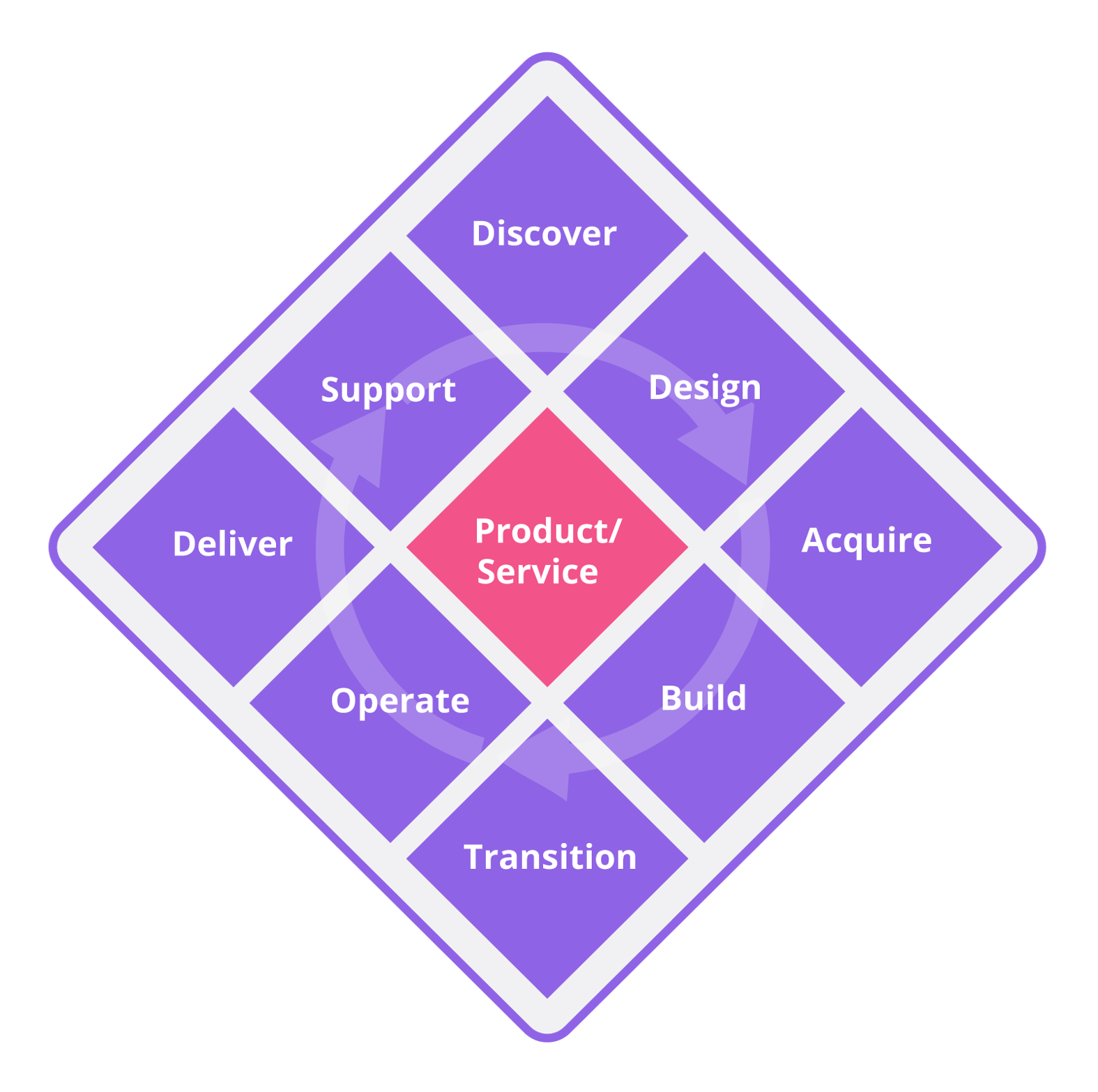
ITIL Product and Service Lifecycle, PeopleCert
ITIL® (Version 5) formally unifies
product management and
service management into a single end-to-end lifecycle.
Digital products and services are treated as two sides of the same solution:
• Products are what organizations build
• Services are how value is delivered, supported, and experienced
This unified lifecycle reduces silos, improves flow, and helps teams design, build, operate, and improve together.
Experience is no longer an afterthought.
ITIL® (Version 5) places strong emphasis on:
• Customer experience
• User experience
• Employee experience
This helps organizations move beyond process compliance toward measurable value and outcomes that stakeholders actually feel.
ITIL® (Version 5) is designed for AI-enabled environments.
Rather than treating AI as a separate topic, ITIL® integrates AI-aware guidance across the framework and introduces ITIL® AI Governance as a dedicated extension module. This helps organizations:
• Adopt AI responsibly
• Manage risk, ethics, and compliance
• Scale automation without losing control
The qualification scheme in ITIL® (Version 5) has been simplified and aligned with real job roles.
It includes:
• Three advanced streams:
• ITIL® Practice Manager
• ITIL® Managing Professional
• ITIL® Strategic Leader
• One extension module: ITIL® AI Governance
• The highest designation: ITIL® Master
A core module, ITIL® Transformation, connects all advanced pathways and focuses on turning guidance into real organizational change.
ITIL® (Version 5) goes far beyond traditional IT service management.
It is designed for:
• IT and service management professionals
• Product managers and digital delivery teams
• Experience and customer journey leaders
• Transformation leaders and enterprise architects
• Executives responsible for digital strategy and governance
In short, ITIL® (Version 5) is relevant wherever digital products and services create value.
If you already hold
ITIL® 4 certifications: • You do not need to retake Foundation
• Your certifications remain valid
• You can continue your journey using ITIL® (Version 5) advanced modules
ITIL® (Version 5) builds on your existing knowledge and provides clearer, more practical pathways for applying ITIL® in modern digital environments.
All
ITIL® (Version 5) certifications, training, and official materials are governed by
PeopleCert, ensuring global consistency, quality, and recognition.
Training requirements remain aligned with existing ITIL® rules:
• ITIL® Foundation (Version 5) does not mandate training
• Advanced modules require accredited training or official eLearning
The rollout of
ITIL® (Version 5) is phased, with Foundation becoming available first, followed by advanced modules throughout 2026.
Organizations and professionals can:
• Continue with ITIL® 4 where appropriate
• Begin planning their transition
• Adopt ITIL® (Version 5) based on role, goals, and timing
There is no forced migration — only a clearer, more future-ready path forward.
ITIL® (Version 5) represents the natural evolution of ITIL® for a digital and AI-driven world.
It preserves what works, expands where needed, and provides a unified, experience-driven framework that connects strategy, delivery, operations, and governance.
One framework.
Clear pathways.
Real business value.
Empty space, drag to resize
Empty space, drag to resize
Empty space, drag to resize